

A character starts with a few details worth keeping
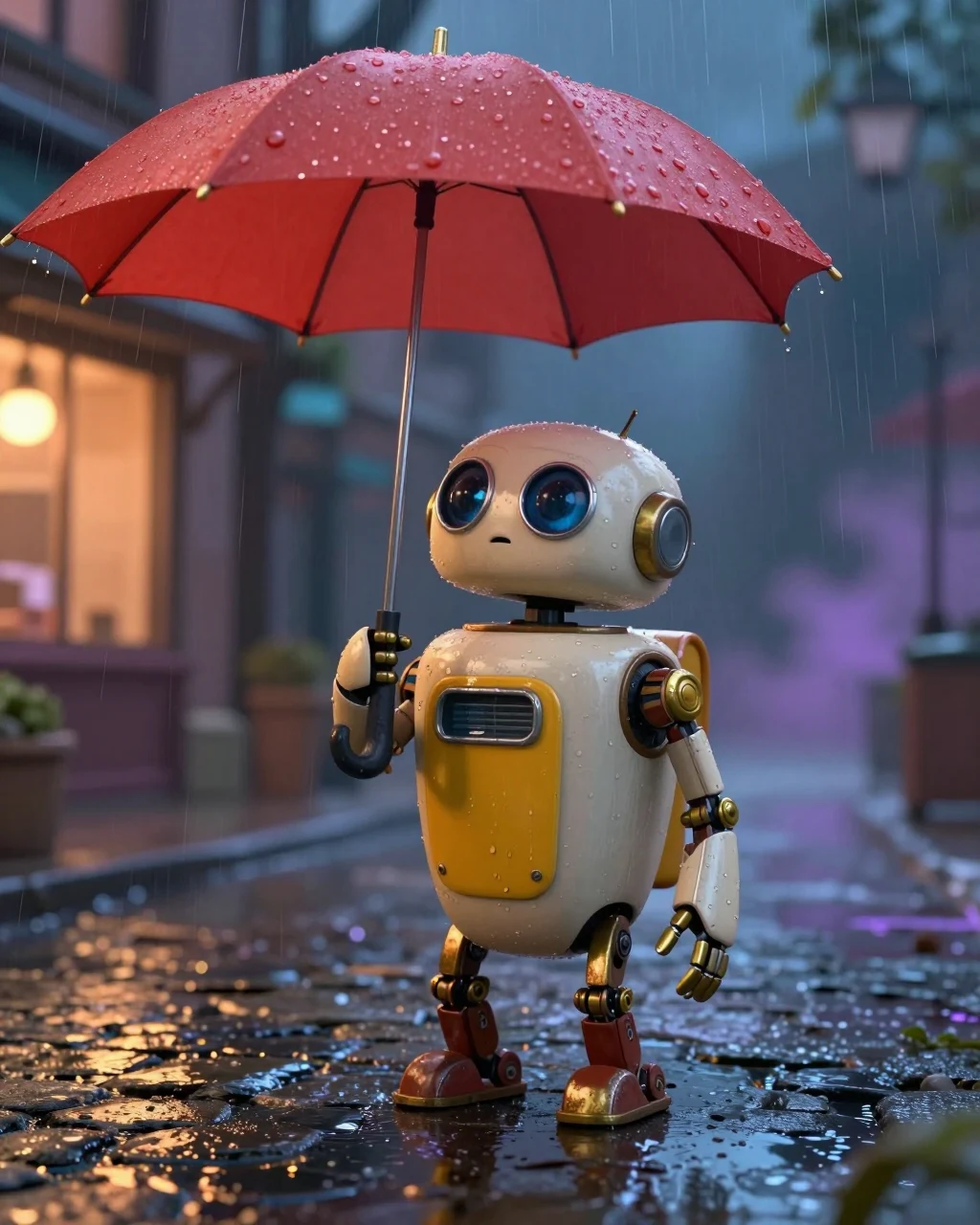
An ivory body, round eyes and a coral umbrella: the brief behind Milo’s first portrait.
On this page
Milo's first portrait gives a small delivery robot a recognizable shape and a moment of curiosity. The retained image and its graph are useful starting points for a character brief. They show one portrait, not a character already tested across a film.
1. Start with something the character is doing
The source puts Milo under a coral umbrella on a rainy city lane, looking upward. That action gives the pose a reason. Warm shop windows and wet cobblestones put the robot in a place where a delivery might happen.
For your own character, write a short situation before listing appearance details. A courier waiting for a door to open suggests a different pose from a courier who has lost the address. You can leave the backstory unwritten while giving the image a clear moment.
2. Name the details you would notice if they changed
Milo's source specifies an ivory enamel body, a mustard-yellow chest panel, two round dark eyes and worn brass details. The umbrella adds a large coral shape above the compact body. These are concrete details to compare in a later take.
Write a short keep-list for your character. Separate anatomy and materials from temporary props or clothing. If the umbrella can disappear in an indoor scene, say so; otherwise the agent may treat its absence as a mistake. Avoid making every tiny mark equally important.
3. Check the whole silhouette
The saved prompt requests a three-quarter view with the full robot and umbrella visible in a vertical 4:5 frame. Review the outline at a small size, then inspect the original for joints, eyes and prop contact. A readable thumbnail can still hide an extra limb or a hand that does not hold its object.
Before asking for a film, choose the portrait you actually want to carry forward. Attach that exact image as the identity reference. A written description alone leaves room for a different robot with similar colors.
4. Test the next view before planning many shots
Ask for one useful change, such as a side view or a short glance toward a window. Compare it with the portrait: did the eye spacing, body proportions or chest panel change? If they did, revise the reference approach before making the rest of the sequence. Save the rejected result with the reason it failed.
Illustrative prompt for a new test; this test has not been run:
“Use the selected Milo portrait as the identity reference. Plan a short shot where Milo looks toward a warm shop window. Keep the ivory body, mustard chest panel, round eyes and coral umbrella. The camera stays still. First explain which reference you will use and what we should check in one test before making more shots.”
Keep the portrait and its recipe
Open Milo's example for the original image and exact graph. The seed and prompt help document the portrait; they do not establish matching identity at another angle or on another model. Reference guidance explains how to attach the selected source and review a small test.
This guide was revised with AI assistance from the retained portrait and source. No new character-consistency trial was run for the revision.
Keep reading
How-to
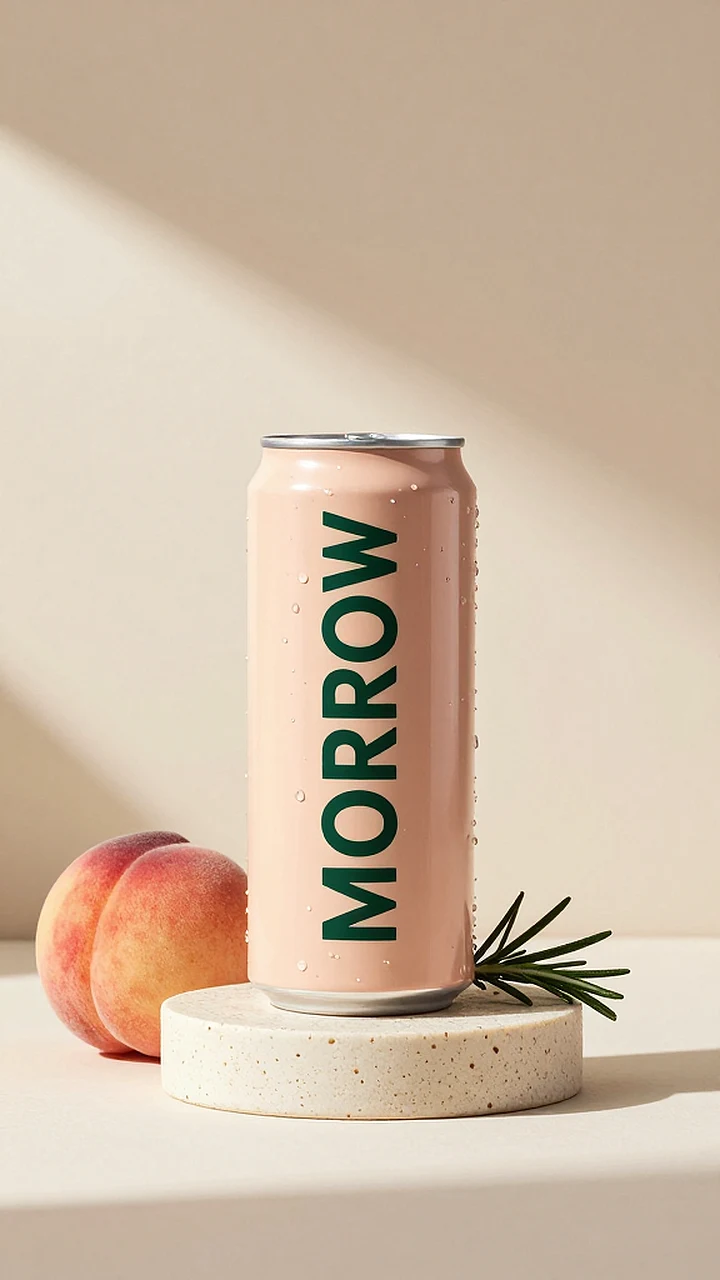
From pear to peach, with the original intact
A real Morrow campaign revision shows what it means to keep a source and take it in a new direction.
How-to
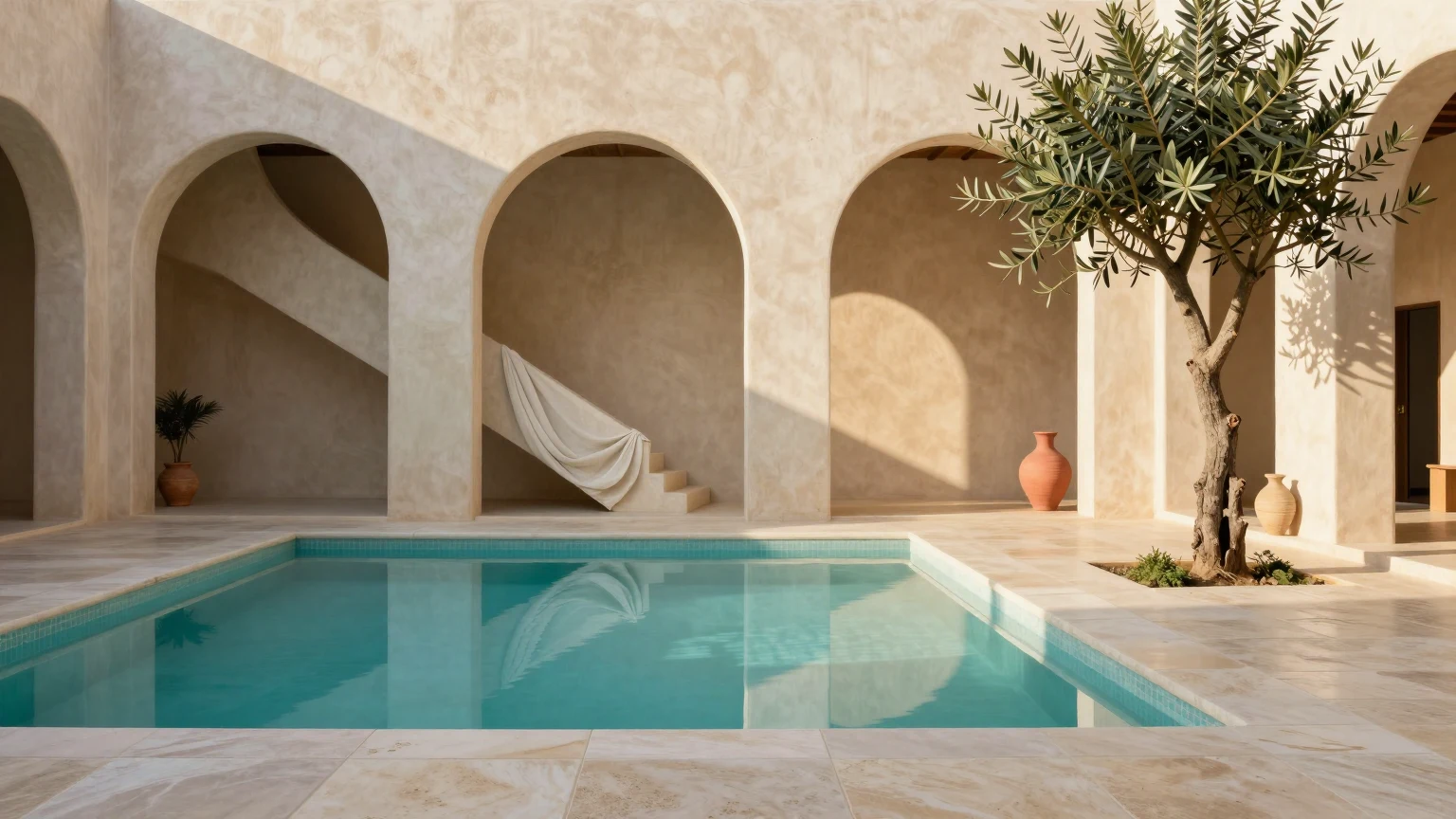
Build a world with light, material and one clear idea
Inside Stillwater, an architectural study built around warm plaster, cool water and a single olive tree.